Friday, 2 August 2013
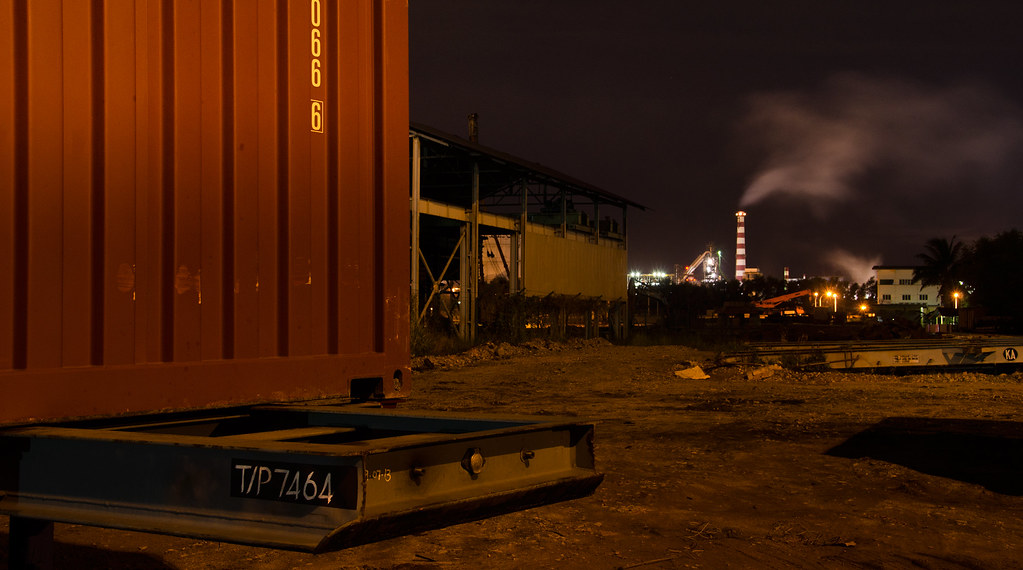
NP: The Evil Factory
Yes, size does matter! Often our brain will process in this order, bigger size subject means closer to us, smaller size subject means further away. So size and distance are very much related and it creates depth to viewer.
Foreground background stuffs again, using shipping container as foreground subject and that makes me curious about what's inside the container especially if it has the evil code, our background subject here is the factory tower, it is smoking hard enough to grab attention!
Thursday, 1 August 2013
MNS: Ground Fire
For this image I'm focusing on - foreground, mid-ground and background. The mid-ground and background already has the depth I want, which is created by colour contrast(cold vs warm color). The foreground is just empty road, so I need to create something interesting to attract the viewer.
Hence the foreground is on fire, light painted with white colour EL-Wire, as I know I'm going to use Tungsten white balance for this image, the white colour will turn into blue. Why not use orange color EL-Wire? Because I don't want the warm, cold, warm colour mix to break the rhythm of this image.
Wednesday, 31 July 2013
MNS: Mafia Ride
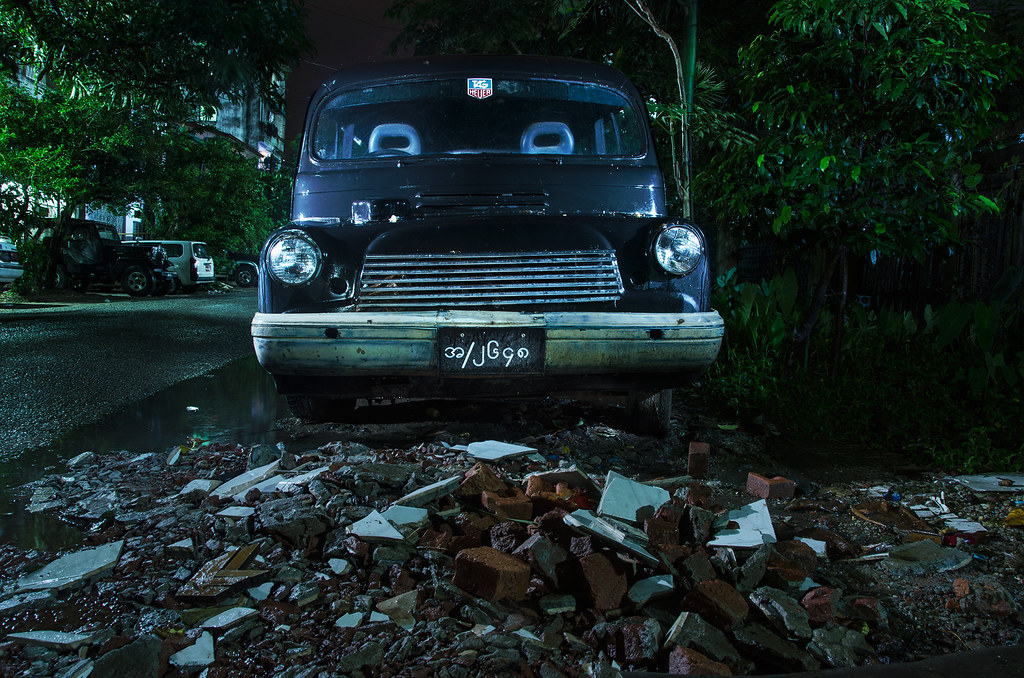
I have never seen this type of car in Malaysia, and it's rare in Myanmar as well, with black colour outlook it looks rock solid and reminds me of Mafia movie. While I love to shoot the car I have to confess I really don't know what car is this, whoever knows the car ID please let me know.
I'm looking for symmetric here, it's tough to balance the light painting on this one because of existing light on camera right, I have used strobe(SB700) instead of flashlight, punch the light from (more on)camera left and (less on)right. Those rocks in the front are lit by existing light.
It's very hard to miss this beast, if you ever seen one.
Wednesday, 24 July 2013
MNS: The Joker
Our imagination runs wild when there are less noise at night, and seeing something out of its original context can be quite fun. The green and the red are always the symbolic colors of Joker to me which projects strong eerie atmosphere.
By the way, where's the Batman?
Saturday, 20 July 2013
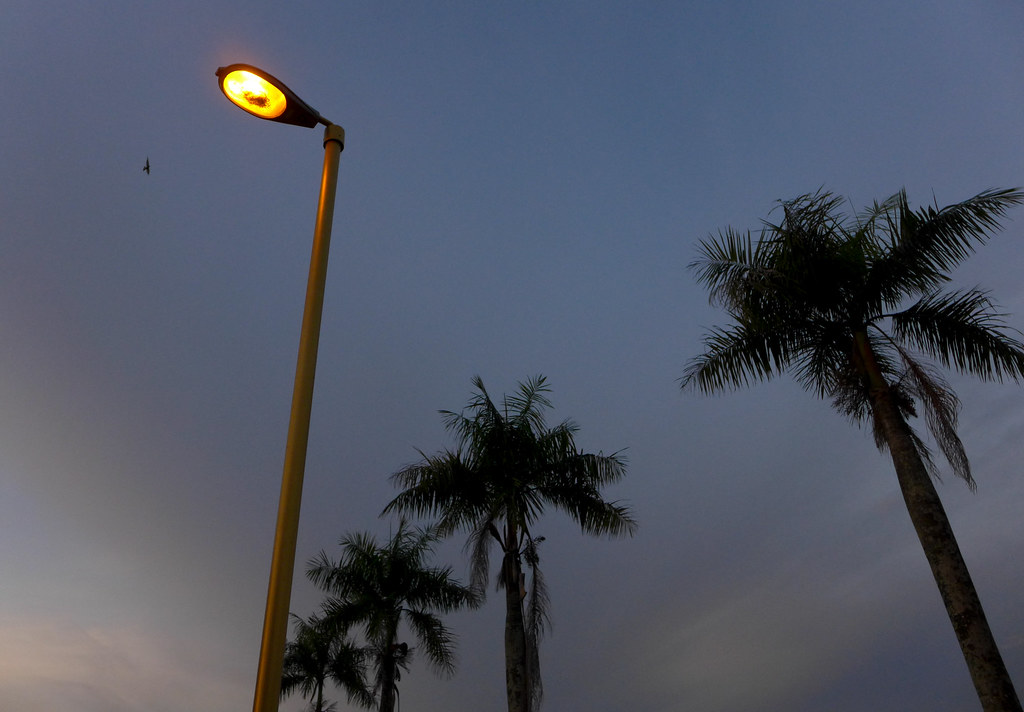
Night Photography: Street Light
I'm always wondering how bright street light is as the environment I used to take night images are always "bundled" with them, and found this interesting information in the internet, would like to share it here in case anyone is interested -
http://hypertextbook.com/facts/2004/MarinaAvetisyan.shtml
While street light is extremely strong(look at the lumens it produced), we can always overpower it easily, and using strobe is definitely not a problem, if you want to overpower street light with flashlight(imagine most of flashlight we have are in between of 1-250 lumens), as long as our subject is not too closed to street light or in the shade, we can do so easily.
http://hypertextbook.com/facts/2004/MarinaAvetisyan.shtml
While street light is extremely strong(look at the lumens it produced), we can always overpower it easily, and using strobe is definitely not a problem, if you want to overpower street light with flashlight(imagine most of flashlight we have are in between of 1-250 lumens), as long as our subject is not too closed to street light or in the shade, we can do so easily.
Sunday, 23 June 2013
Night Photography Gear Test: Lumix LX7
I have borrowed Lumix LX7 compact camera from my friend to do night photography field test, after one month plus of shooting, finally I sit down and put all my notes together.
The test I'm doing, mainly focusing on the usability and performance in night photography. Instead of explaining stuffs in long text, I just summarized them in point form -
Pros:
1. Aperture - With F1.4, you can shoot wide open and capture a lot of stars, on the other hand makes freezing subject at night possible
2. Shutter speed - Support up to 250 seconds(4 minutes and 10 seconds exposure, you don't need to buy additional shutter release for long exposure works)
3. ISO - Usable up to 800(before intrusive noise appears)
4. Lens - Leica lens resolution power is amazing to capture detail at night
5. Focus - Both autofocus and manual focus, LX7 autofocus is interesting, if you point your camera to dark location and it sees nothing, it will automatically set your focus to infinity so you get 0.5 meter to infinity depth of field and that's very practical for night photographer, if you want to focus on certain area, the manual focus in LX7 does show the DOF zone meter so you can easily focus at night. To adjust manual focus, you just need to roll the ND filter button
6. Countdown timer - It shows the timer when you set to 1 seconds exposure or more so you know exactly when the shutter is closed
7. Build-in ND Filter - It is very handy, why? In the location where street light is massive, and yet you want to do light painting, you can prolong the exposure time by turn on ND filter(as LX7 can go up to F8 only, so the ND filter can be used to compensate)
8. Hot Shoe - It might not be used often by night photographer but you can trigger flash remotely
9. Size - It's little compact, you can be more stealthy and move around faster
Cons:
1. Long exposure noise reduction(LENR) - This function can't be turned off, it shows up when you shoot with shutter speed of 1s(this eliminates the possibility to capture star trails, normally LENR will capture the dark frame to cancel out the long exposure noise(hot pixel), for 60 seconds exposure it will take another 60 seconds to capture the dark frame)
2. Timelapse function(intervalometer) - It is not flexible(1 minute interval as minimum setting, if LENR can be turned off and the interval can be set to 1 second, we will be able to make star trails image)
3. White balance - Never expect auto WB to be accurate when shooting at night especially if you are going for urban-scape, if you shoot under street light, it always shifts to yellow colour cast, however you can solve this problem by shooting raw
4. Noise - It creates problem in shadow area, the chromatic noise is quite obvious in shadow area, this is critical in night photography because the noise affects the detail in the shadow and it's very hard to clean up in post-processing, and this shadow noise seems to happen even at ISO 80(I remember I see more pleasing output from LX5)
5. Lens hood - No lens hood, the lens is easily exposed to flare. There's workaround, make your own lens hood using black card, here's the interesting part, you can easily see if any flare in the LCD screen in real time, then use black card to block them accordingly
Let the images speak for themselves -
I won't go into detail on how I create all the images here, in short they are all captured at night, the raw file is further post-processed using camera raw and photoshop. I kind of like luminance noise in LX7, it looks like film grain to me but will never shoot more than ISO 800 though. Ergonomic wise I can't speak for others but I find it very pleasant to use with all the important functions(aperture,shutter speed, iso, white balance, exposure compensation, manual focus) can be accessed easily without drilling deep into the menu. I have tried Canon S100 before, both S100 and LX7 are very close for day use, however if you are interested in night photography, LX7 is definitely a winner.
What I'm hoping though, Panasonic makes the firmware update to allow us to set LENR manually and improves Timelapse function, that way we will be able to make star trails image, if they really do this, LX7 will be the complete camera for night photography.
The test I'm doing, mainly focusing on the usability and performance in night photography. Instead of explaining stuffs in long text, I just summarized them in point form -
Pros:
1. Aperture - With F1.4, you can shoot wide open and capture a lot of stars, on the other hand makes freezing subject at night possible
2. Shutter speed - Support up to 250 seconds(4 minutes and 10 seconds exposure, you don't need to buy additional shutter release for long exposure works)
3. ISO - Usable up to 800(before intrusive noise appears)
4. Lens - Leica lens resolution power is amazing to capture detail at night
5. Focus - Both autofocus and manual focus, LX7 autofocus is interesting, if you point your camera to dark location and it sees nothing, it will automatically set your focus to infinity so you get 0.5 meter to infinity depth of field and that's very practical for night photographer, if you want to focus on certain area, the manual focus in LX7 does show the DOF zone meter so you can easily focus at night. To adjust manual focus, you just need to roll the ND filter button
6. Countdown timer - It shows the timer when you set to 1 seconds exposure or more so you know exactly when the shutter is closed
7. Build-in ND Filter - It is very handy, why? In the location where street light is massive, and yet you want to do light painting, you can prolong the exposure time by turn on ND filter(as LX7 can go up to F8 only, so the ND filter can be used to compensate)
8. Hot Shoe - It might not be used often by night photographer but you can trigger flash remotely
9. Size - It's little compact, you can be more stealthy and move around faster
Cons:
1. Long exposure noise reduction(LENR) - This function can't be turned off, it shows up when you shoot with shutter speed of 1s(this eliminates the possibility to capture star trails, normally LENR will capture the dark frame to cancel out the long exposure noise(hot pixel), for 60 seconds exposure it will take another 60 seconds to capture the dark frame)
2. Timelapse function(intervalometer) - It is not flexible(1 minute interval as minimum setting, if LENR can be turned off and the interval can be set to 1 second, we will be able to make star trails image)
3. White balance - Never expect auto WB to be accurate when shooting at night especially if you are going for urban-scape, if you shoot under street light, it always shifts to yellow colour cast, however you can solve this problem by shooting raw
4. Noise - It creates problem in shadow area, the chromatic noise is quite obvious in shadow area, this is critical in night photography because the noise affects the detail in the shadow and it's very hard to clean up in post-processing, and this shadow noise seems to happen even at ISO 80(I remember I see more pleasing output from LX5)
5. Lens hood - No lens hood, the lens is easily exposed to flare. There's workaround, make your own lens hood using black card, here's the interesting part, you can easily see if any flare in the LCD screen in real time, then use black card to block them accordingly
| Old Tree |
| The Night Dream |
| The Night Hope |
| Getting Away From Business |
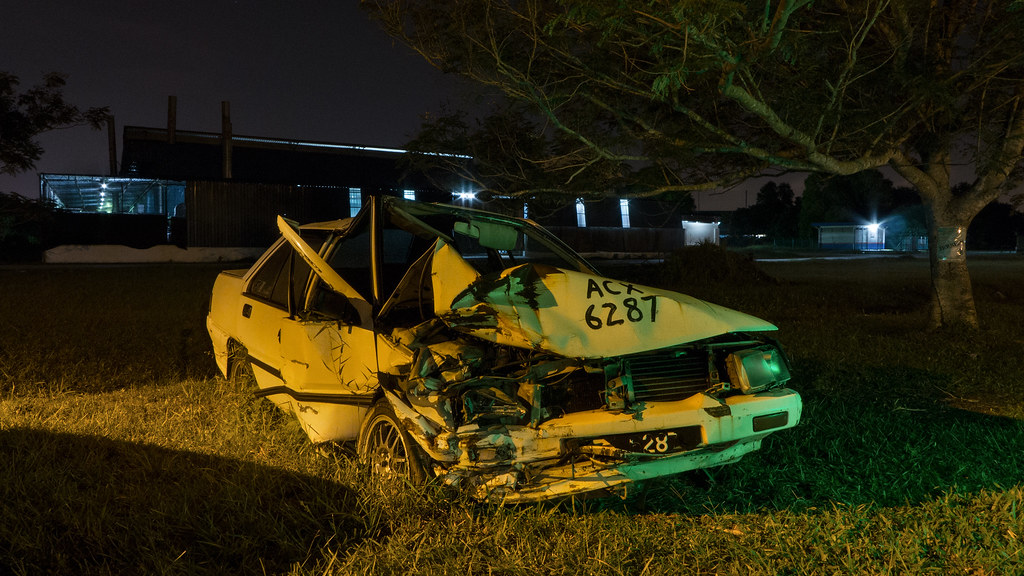
| Crashing In Style |
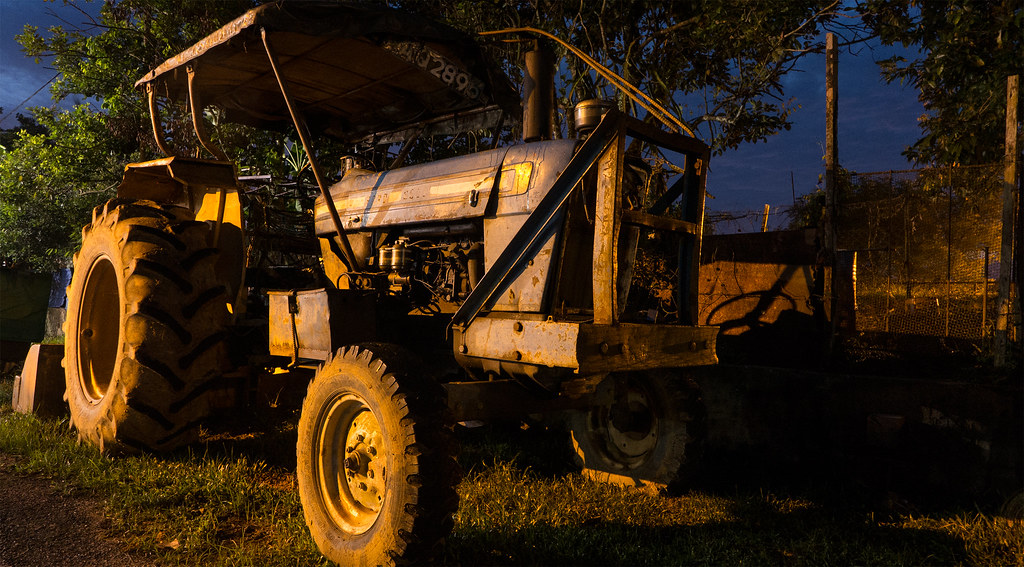
| Rusty Beauty |
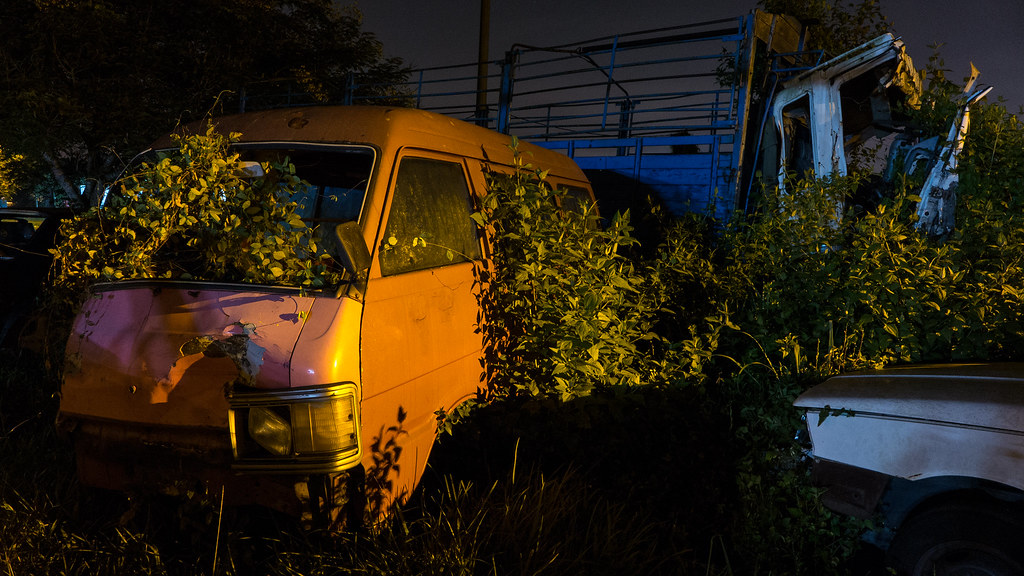
| Natural Blending |
| Good bye, trees ... |
| Illuminate Me II |
What I'm hoping though, Panasonic makes the firmware update to allow us to set LENR manually and improves Timelapse function, that way we will be able to make star trails image, if they really do this, LX7 will be the complete camera for night photography.
Saturday, 22 June 2013
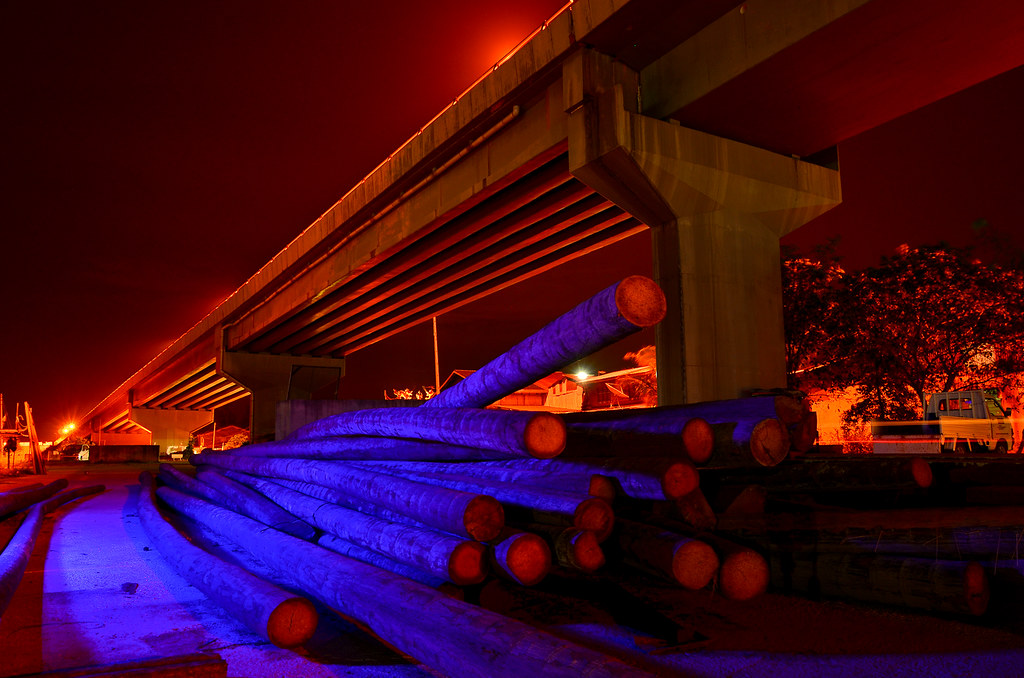
NP: Bridge Underneath
This image is part of my ongoing personal project - Home Town At Night.
When comes to creating this image, what I want to achieve is the extreme color contrast, so I set cloudy white balance to enhance the already orange colour cast from street light, then light painting the wood sticks with blue colour light from camera left, everything comes together after second try.
Subscribe to:
Posts (Atom)